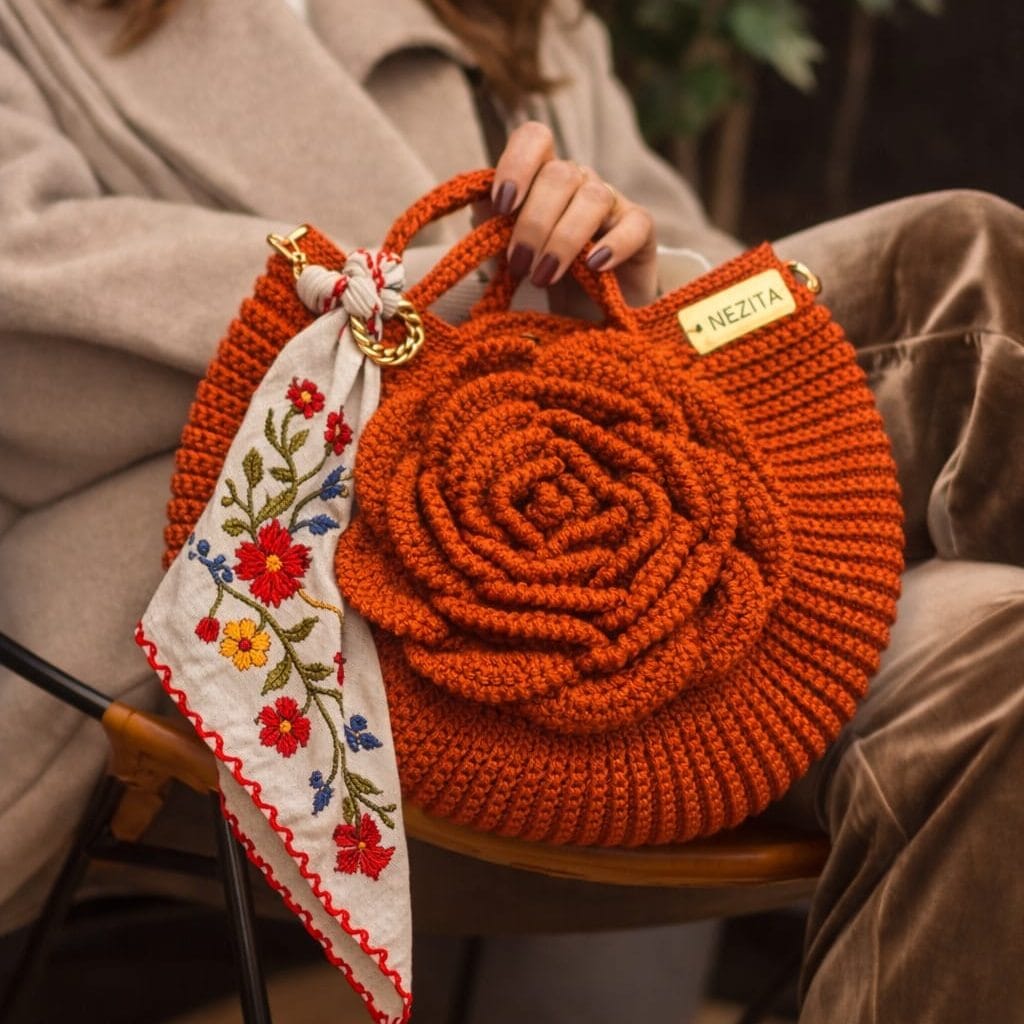
Some of Portugal’s most beautiful stories aren’t written, they’re embroidered.
Portugal holds many stories that aren’t written in books.
They live in the hands of those who create them.
For generations, in many Portuguese homes, embroidery, crocheting, or working with threads and fabrics was part of life. They were tranquil gestures, learned naturally, passed down between mothers, grandmothers, and daughters, while time slowly passed.
From these gestures were born some of the most beautiful expressions of Portuguese craftsmanship.
Among them are the Viana Embroidery, originating from Viana do Castelo. Colorful, delicate, and full of symbolism, they depict flowers, leaves, and the well-known Viana heart, a symbol of affection and tradition.
For a long time, they were part of the trousseau of young women in the region. Handkerchiefs, aprons, and towels were embroidered to accompany important moments in life.
Each stitch was made calmly.
Each design held a little of the person who embroidered it.
Despite being born from ancient traditions, they remain surprisingly current. When used creatively, these elements can become part of everyday life, subtly transforming a look and adding identity without losing naturalness.
Today they continue to remind us of something essential: what is born from the hands is never just an object, it is also memory, culture and time.
In this blog space, we will occasionally look back at some of these traditions that remain alive and are part of the Portuguese cultural identity.
Point by point, these stories cross generations.
And they continue to remind us that the truest beauty is born from the hands.
Perhaps that is also where Inezita’s story begins.
With love,
Inês Caramês, inezita